
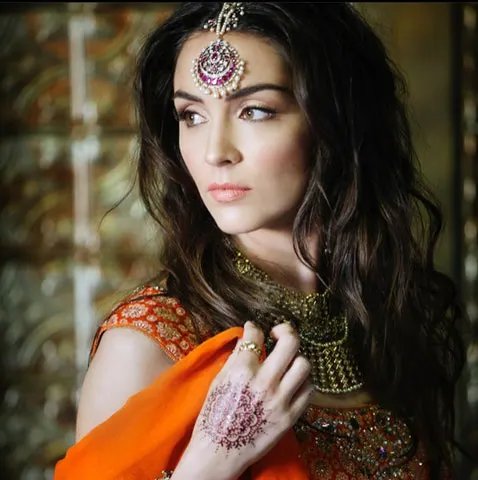
Intricate Indian Wedding Jewelry: Tradition, Craftsmanship and Timeless Beauty
Indian weddings are known around the world for their color, celebration, elaborate traditions, and unforgettable visual beauty.
From richly detailed clothing to flowers, music, ceremonies, and beautifully crafted jewelry, every element can carry cultural meaning.
For Manjusha Jewels designer Jyotsna “Joey” Singh, Indian wedding jewelry has an even more personal connection.
Growing up as the granddaughter of Maharaja Bhupinder Singh of Patiala, Joey was surrounded from an early age by the extraordinary jewelry traditions associated with India’s royal heritage.
That early exposure would eventually become an important influence on her own journey as a jewelry designer.
What Makes Indian Wedding Jewelry So Distinctive?
In many Western wedding traditions, the bridal look is often associated with a white gown and relatively restrained jewelry.
Indian bridal traditions can take a very different visual approach.
Color, intricate craftsmanship, gemstones, gold, embroidery, and elaborate accessories often come together to create a look that feels celebratory and deeply connected to culture.
Jewelry isn’t simply an accessory.
It can represent family heritage, regional traditions, prosperity, beauty, and the importance of the wedding itself.
Jewelry as Part of the Bridal Story
Indian bridal jewelry can include necklaces, earrings, bangles, rings, maang tikas, nose ornaments, waist jewelry, anklets, and other traditional pieces.
The specific styles vary considerably depending on the region, community, family, and personal preference.
What remains consistent is the attention given to craftsmanship and detail.
For many brides, these pieces also become family heirlooms that carry memories from one generation to another.
Joey Singh’s Connection to Indian Royal Jewelry
Joey’s relationship with elaborate Indian jewelry began long before she became a designer.
Her grandfather, Maharaja Bhupinder Singh of Patiala, was known for his extraordinary collection of jewelry and precious objects.
Growing up with that family history gave Joey an unusual opportunity to understand the visual richness and craftsmanship of royal Indian adornment.
When she eventually entered the world of jewelry design, those early impressions naturally found their way into her creative thinking.
Rather than simply reproducing historical pieces, she began exploring how traditional ideas could be interpreted through her own design language.
Understanding Jadau Jewelry
Among the traditional techniques that particularly fascinated Joey is jadau.
Jadau is a traditional form of Indian jewelry craftsmanship known for its detailed setting of gemstones into gold.
The technique has strong historical associations with Mughal-era India and became particularly established in regions such as Rajasthan.
The word jadau is associated with the idea of embedding or setting.
A Craft Built on Patience and Precision
Creating jadau jewelry requires specialized skills and considerable patience.
Traditionally, different artisans can be involved in different stages of production.
The design and decorative work may be handled by specialized craftsmen, while others shape and prepare the gold framework.
Gemstones are then carefully incorporated into the design.
The process is highly detailed, and intricate pieces can require substantial time to complete.
That craftsmanship is part of what gives traditional jadau jewelry its distinctive character.
The Beauty of Kundan and Meenakari
Jadau is not the only traditional technique associated with Indian jewelry.
Two other important traditions are kundan and meenakari.
Kundan jewelry is known for its distinctive gemstone setting technique, particularly its use of highly refined gold foil or setting methods to secure stones.
Meenakari, meanwhile, is associated with colorful enamel work applied to jewelry surfaces.
These techniques can be used individually or in combination, producing pieces with remarkable depth, color, and detail.
Why These Techniques Remain Relevant
Traditional jewelry techniques continue to inspire contemporary designers because they offer something that mass-produced jewelry often cannot replicate: visible craftsmanship.
Small variations, hand-finished details, and the time required to create each component give traditional jewelry a sense of individuality.
For a designer like Joey, those qualities provide a bridge between history and modern design.
The Role of Jewelry in Indian Weddings
Jewelry has long played an important role in Indian wedding traditions.
Beyond its decorative function, jewelry can carry emotional and cultural significance.
Pieces may be gifted by parents, grandparents, or other family members.
Some are purchased specifically for the wedding, while others may have been passed down through generations.
For the bride, wearing family jewelry can create a direct connection to the women who came before her.
More Than an Expression of Luxury
Indian bridal jewelry is often visually elaborate, but its meaning isn’t limited to displaying wealth.
A necklace might represent family history.
A pair of earrings may have been worn by a mother or grandmother.
A particular design might reflect a regional tradition.
A gemstone may have personal significance.
This is why bridal jewelry can remain meaningful long after the wedding day has passed.
From Royal Inspiration to Contemporary Design
Joey’s early exposure to royal jewelry influenced her appreciation for detail, but her work has continued to evolve.
Her goal isn’t to recreate the scale or extravagance of historical royal collections.
Instead, she draws from traditional forms, craftsmanship, colors, and motifs and interprets them for modern women.
This creates jewelry that can feel connected to heritage without being limited to formal occasions.
Creating Jewelry for Today’s Woman
Contemporary jewelry has to work with modern lifestyles.
A piece can be inspired by centuries-old craftsmanship while still feeling appropriate for today’s wardrobe.
That balance between tradition and modernity has become an important part of the Manjusha Jewels design philosophy.
The influence of Indian bridal jewelry can still be seen in the richness of detail and craftsmanship throughout Joey’s work, even when the finished piece isn’t designed specifically for a wedding.
The Lasting Influence of Indian Bridal Jewelry
Although Joey has moved beyond creating dedicated Indian wedding collections, that chapter remains part of her creative journey.
The techniques, visual language, and cultural influences she explored during that period continue to inform her work.
Her experience designing bridal jewelry also gave her a deeper appreciation for the relationship between jewelry and memory.
A bride may wear a piece for one extraordinary day, but photographs and memories can preserve that moment for decades.
Jewelry That Becomes Part of a Memory
This is one of the most beautiful aspects of bridal jewelry.
Long after the flowers have faded and the celebration has ended, the jewelry can remain.
It may be stored away for years.
It may be worn again for another celebration.
Eventually, it may be passed to a daughter or granddaughter.
In that way, jewelry becomes part of a family’s story.
Frequently Asked Questions
Q1: What is Indian wedding jewelry?
Indian wedding jewelry refers to the wide variety of traditional and contemporary jewelry worn by brides and wedding participants across India’s diverse regions and communities. Styles can include necklaces, earrings, bangles, rings, headpieces, nose jewelry, and more.
Q2: What is jadau jewelry?
Jadau is a traditional Indian jewelry technique involving the detailed setting or embedding of gemstones into gold. It is strongly associated with North Indian craftsmanship and has historical connections with Mughal-era jewelry traditions.
Q3: What is the difference between jadau and kundan jewelry?
Jadau describes a broader style and traditional method of creating elaborate gemstone jewelry, while kundan refers specifically to a distinctive gemstone-setting technique. The two traditions can overlap in certain pieces.
Q4: What is meenakari jewelry?
Meenakari is a traditional enamel decoration technique used to add vibrant colors and detailed patterns to jewelry and other decorative objects.
Q5: Why is Indian bridal jewelry so detailed?
Indian bridal jewelry often combines cultural symbolism, craftsmanship, gemstones, precious metals, and regional traditions. The level of detail reflects both the importance of the occasion and the long history of Indian jewelry craftsmanship.
Q6: How did Indian royal jewelry influence Joey Singh?
Joey grew up with a family connection to Maharaja Bhupinder Singh of Patiala and was exposed to the extraordinary jewelry traditions associated with Indian royalty. Those experiences became an important source of inspiration when she began designing jewelry.
Q7: Does Manjusha Jewels still create Indian bridal jewelry?
Joey has moved beyond dedicated Indian wedding jewelry collections, but the craftsmanship, cultural influences, and design ideas she explored through bridal jewelry continue to influence her work.
Q8: Can traditional Indian jewelry be worn today?
Absolutely. Traditional techniques and motifs can be interpreted in contemporary ways, creating jewelry that works for weddings, celebrations, special occasions, and everyday wear.
Conclusion: When Jewelry Carries a Story
Indian wedding jewelry is beautiful because of more than its gold, gemstones, and intricate craftsmanship.
It carries stories.
Stories of families.
Stories of traditions.
Stories of artisans.
Stories of brides beginning a new chapter in their lives.
For Joey Singh, the world of Indian bridal jewelry provided an especially meaningful connection to her own heritage and to the royal jewelry traditions she encountered throughout her life.
Although her designs have evolved over time, the influence remains.
The appreciation for detail.
The respect for craftsmanship.
The love of color and gemstones.
And the belief that jewelry can become part of a person’s most meaningful memories.
That is the lasting beauty of Indian jewelry—it can be worn for a moment, but its story can last for generations.
Disclaimer
This article is provided for general cultural and educational purposes. Indian wedding jewelry traditions vary significantly by region, community, religion, family, and individual preference. Terms such as jadau, kundan, and meenakari can encompass different techniques and interpretations depending on the artisan and regional tradition. Historical descriptions are presented as general background and should not be considered a definitive account of every Indian jewelry tradition. Product availability, materials, and designs may change over time.
For further reading on the history, craftsmanship, and traditions of Indian jewelry, explore the Victoria and Albert Museum’s South Asian art collection.
With warmth,
The Manjusha Jewels Family