
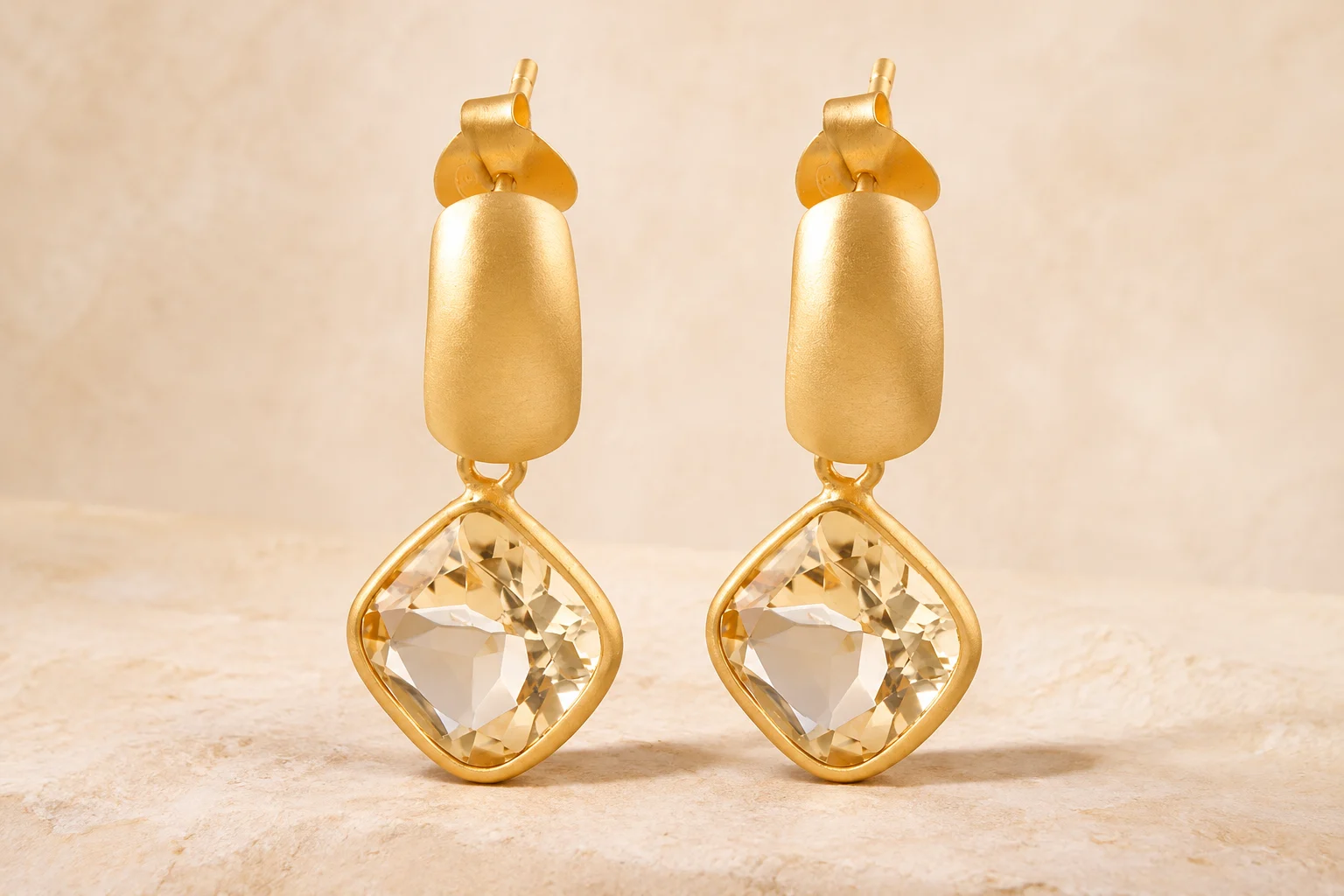
The word “citrine” first appeared in 1385, borrowed from the French citron for its warm, lemon-to-amber glow, but people were drawn to this sunny quartz long before it had a name. Ancient Egyptians carried citrine as a talisman. Greek artisans carved intricate images into its golden surface. Roman priests fashioned it into rings, prizing a stone that seemed to hold sunlight itself inside a piece of crystal.
Today, citrine remains one of the most-loved gemstones in the jewelry box: bright without being loud, warm without being heavy, and easy to wear every day. Here is the story of November’s sunshine stone, from ancient talisman to modern birthstone, and how we set it at Manjusha.
The History and Origin of Citrine
Citrine belongs to the quartz family, the same mineral family as amethyst, rose quartz, and smoky quartz. What separates it from its cousins is color: trace amounts of iron give citrine its range of tones, from pale lemon and honey to deep, glowing amber.
Natural citrine is relatively uncommon in the earth. Much of the citrine on the market today is amethyst that has been gently heated, a long-accepted practice that shifts purple quartz toward gold. In a few places, nature does something remarkable on its own: at the Anahí mine in Bolivia, amethyst and citrine grow together in the same crystal, creating the two-toned stone known as ametrine. Brazil, Bolivia, and Madagascar are among today’s important sources.
For much of history, citrine was confused with other yellow gems, especially topaz. Traders even sold it under misleading names such as “Madeira topaz,” a mix-up that only began to clear once modern gemology could tell the two stones apart. That shared history is one reason November now honors both stones.
Citrine had its great fashion moments, too. In Victorian Britain, Queen Victoria’s love of Scottish jewelry made golden quartz popular in brooches and kilt pins. In the 1920s and 1930s, Art Deco designers set large, geometric citrines into cocktail rings, and the stone became a favorite of Hollywood glamour in the decades that followed.
Citrine Folklore: The “Merchant’s Stone”
Across centuries, citrine earned a reputation as something more than decorative. It was often called “the merchant’s stone,” tucked into cash drawers and carried by traders who believed it helped attract wealth and success. Shopkeepers kept a piece near the till as a quiet wish for a good season.
Folklore also credited citrine with calming tempers, attracting love, and instilling quiet confidence. It was one of the few stones believed to repel negative energy rather than absorb it, which is why it was rarely thought to need “cleansing” the way other stones were. In modern crystal traditions, citrine is still associated with optimism, creativity, and personal confidence.
Whatever one believes about a stone’s powers, it is easy to see where these ideas came from. Citrine looks like warmth made visible. Wearing it feels a little like carrying a bit of good weather with you.
Why Citrine Is November’s Go-To Birthstone
It is that warmth that makes citrine such a natural fit for November, a month that asks for a little brightness as the days shorten. When American jewelers first standardized the modern birthstone list in 1912, topaz was November’s stone. Citrine was later added as an alternate, giving the month two golden gemstones to choose from.
Citrine has become a favorite gift for anyone born in late autumn, and it is a practical one. At 7 on the Mohs hardness scale, citrine is durable enough for rings, earrings, and pendants that are worn often. Its warm color also suits the season’s wardrobe beautifully: camel coats, cream knits, burgundy, olive, and deep navy all look richer next to a flash of gold-toned stone.
Styling Citrine in 22K Gold-Plated Sterling Silver
For Joey, citrine’s appeal is in its versatility. It is equally at home in a delicate everyday ring or set boldly as the centerpiece of a statement piece, always glowing rather than shouting. Paired with Manjusha’s signature 22K gold plating over sterling silver, the stone’s golden tones deepen into something closer to heirloom than trend.
Our Sofia Bar Drop Earrings in Citrine show how simply that works: a clean gold-plated bar, a natural citrine drop, and enough movement to catch the light when you turn your head. They are easy to wear on their own or alongside a gold-plated necklace, and they pair just as well with a crisp white shirt as with an evening sweater.
This earring is named after our first grandchild, who is bright as sunshine.
A few styling ideas:
- Keep it monochrome. Citrine with gold-plated pieces creates a warm, polished look that works from morning to evening.
- Mix in cool tones. Citrine also looks striking next to blue topaz or aqua chalcedony for a seasonal contrast.
- Let one piece lead. A single citrine pendant or pair of drops can carry an outfit without anything else competing.
How to Care for Citrine Jewelry
Citrine is durable, but a little care keeps it glowing. Store pieces away from long periods of direct sunlight, which can slowly fade some citrine over time. Clean with warm, mild soapy water and a soft cloth, then dry fully. Because Manjusha pieces are finished in 22K gold plating, put jewelry on after lotions and perfume, and keep it away from chlorine, cleaning products, and harsh polishing cloths.
Shop the Manjusha Citrine Collection
Our Citrine Collection is built for exactly that kind of everyday radiance: pieces meant to be worn often, not saved for occasions. Whether you are celebrating a November birthday or simply want a little sunshine for the darker months, citrine is a gift that keeps its warmth all year.
Shop our Citrine Collection at manjushajewels.com/collections/citrine
Frequently Asked Questions
Q1: What is citrine and why is it associated with November? Citrine is a warm, golden-to-amber variety of quartz. It is one of November’s two birthstones, alongside topaz, and is prized for its sunny color as the days grow shorter.
Q2: Is citrine a rare or expensive gemstone? Natural citrine is uncommon, but citrine overall is widely available and relatively affordable, which makes it popular for everyday jewelry rather than only special-occasion pieces.
Q3: What does citrine symbolize? Historically called “the merchant’s stone,” citrine has long been associated with prosperity, calm, and confidence, and was once believed to repel negative energy.
Q4: Is Manjusha’s citrine jewelry solid gold? No. Manjusha pieces are crafted on a sterling silver base, finished with genuine 22K gold plating, and set with natural gemstones.
Q5: How should I care for citrine jewelry? Keep it out of long periods of direct sunlight, clean it gently with mild soapy water and a soft cloth, and keep it away from harsh chemicals to protect both the stone and the gold plating.
Q6: What other birthstone pairs with citrine in November? Topaz is November’s other birthstone, offering a cooler, more luminous alternative to citrine’s golden warmth.